|
The Potato Breeding Process
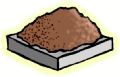 Usually 25 different varieties of potato are
placed on a tile and covered with soil in the greenhouse. Usually 25 different varieties of potato are
placed on a tile and covered with soil in the greenhouse.
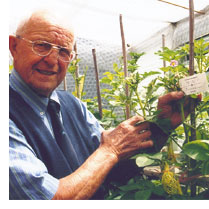 The potato is allowed to grow that way until
it is 40 cm tall. All but two of the sprouts, all the
potato-forming stems and the soil is removed at this
time. The roots are left in place. This is done so that
all of the power of potato stimulates the stems. The potato is allowed to grow that way until
it is 40 cm tall. All but two of the sprouts, all the
potato-forming stems and the soil is removed at this
time. The roots are left in place. This is done so that
all of the power of potato stimulates the stems.
Now that the stem has received all of the
power from the potato, it now transfers this power also
to the leaves and flowers. It is not uncommon for a plant
to have as many as seven clusters of flowers. The stem
will reach a height of about two and a half meters.
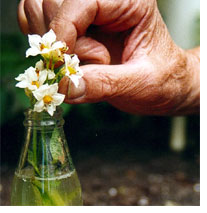 The breeder will pollinate the clusters of
flowers in the usual way, placing some of the material
from the outer male part onto the center female part. The
female part always stays with the cluster, where they are
pollinated with the male substance from a cluster, from
another stem, from another potato. The breeder will pollinate the clusters of
flowers in the usual way, placing some of the material
from the outer male part onto the center female part. The
female part always stays with the cluster, where they are
pollinated with the male substance from a cluster, from
another stem, from another potato.
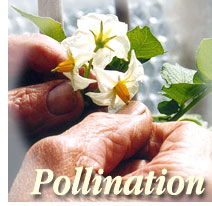
Please note: the timing of pollination is
very important to avoid self-pollination and unwanted
pollination. Once this is done, a bag is placed over the
newly pollinated flower for the breeder to keep track of
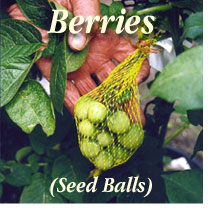
the pollination. In time, seed balls ( 2 to 10) form from
the flower and will drop into the bag.The seed balls are allowed to dry for easy
removal of the new seeds. There can be up to a total of
200 seeds in each seed ball. All of seeds (balls) in each
cluster are all genetically different (brother and
sister) and are kept together.
 One hundred of seeds are gathered from each
pollination and planted in small pots, one seed per pot. The
yield of potatoes from each pot is from zero to three. One hundred of seeds are gathered from each
pollination and planted in small pots, one seed per pot. The
yield of potatoes from each pot is from zero to three.
|